
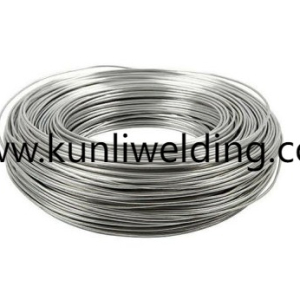

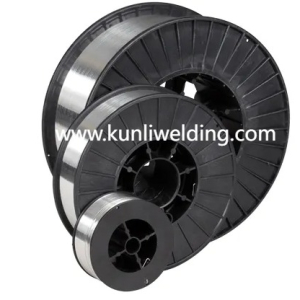
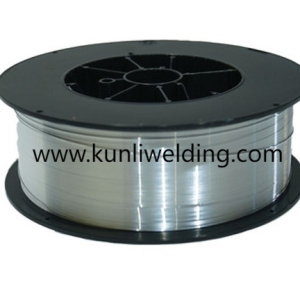
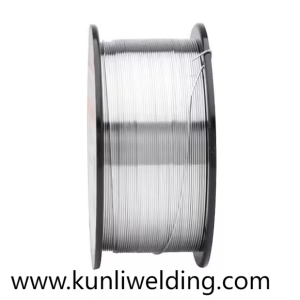
With coastal cities expanding and offshore wind farms multiplying along busy shipping lanes, aluminum structures now spend their entire service life surrounded by aggressive salt mist. The welds holding these frameworks together face the same relentless attack as the base metal itself. In this environment, small differences in alloy composition dramatically influence how long a joint remains intact. Aluminum Welding Wire ER5087 enters the conversation precisely because its magnesium level sits in a range that encourages a more stable oxide layer than many familiar alternatives.
When seawater contacts a fresh aluminum weld, the race between protective film formation and localized breakdown begins immediately. Wires with lower magnesium content often form thinner, less adherent oxides that allow chloride ions to penetrate sooner. The higher magnesium version develops a denser barrier that slows this penetration, giving the surface more time to passivate even after mechanical damage or thermal cycling during welding.
Pitting remains the silent threat that turns tiny defects into serious leaks. Observations from actual splash-zone components show that welds made with standard 5xxx fillers sometimes initiate pits along the fusion line earlier than expected. The altered chemistry in ER5087 appears to raise the potential needed for pit stabilization, meaning shallow surface marks tend to repassivate instead of growing deeper over the seasons.
Stress corrosion cracking haunts highly loaded members exposed to tensile stress and salt. Traditional filler metals can become susceptible when residual welding stresses combine with environmental exposure. The magnesium-rich wire produces a welded microstructure that raises the threshold for crack initiation, offering fabricators an additional margin in areas prone to fatigue and corrosion working together.
Exfoliation corrosion attacks layered microstructures typical of some plate alloys. Welds placed on such materials need compatible corrosion modes. Field experience indicates that matching the filler metal magnesium content closer to modern marine-grade plates reduces the tendency for lifting or delamination along heat-affected zones, keeping the outer skin intact longer.
Warm seawater accelerates many degradation mechanisms. Tropical ports and equatorial trade routes subject hulls and platforms to conditions that quickly separate adequate performers from marginal ones. Welds executed with the newer composition maintain smoother surfaces after prolonged immersion compared to earlier standard choices, simplifying inspection and reducing the need for protective coatings in hidden areas.
Galvanic coupling occurs whenever dissimilar metals meet. Aluminum superstructures bolted to steel decks create natural cells that drive corrosion current. Using a filler wire whose natural potential sits closer to modern 5083 or 6061 base metals minimizes this driving force, keeping the weld zone from becoming the sacrificial partner in the couple.
Fabricators handling mixed contracts notice that the same spool performs consistently whether joining 5xxx to 6xxx series or repairing older 5xxx structures. The balanced corrosion potential reduces surprises when different plate batches arrive on the same project.
Maintenance teams repairing older vessels often cut out sections weakened by corrosion only to find certain weld beads still showing original contours while adjacent areas have wasted away. These real-world markers guide new construction specifications toward filler metals that age more gracefully in the same environment.
Anyone evaluating options for projects that will face decades of saltwater exposure can visit kunliwelding.com. The site gathers practical observations from shipyards, offshore contractors, and industrial fabricators about how Aluminum Welding Wire ER5087 behaves alongside more traditional choices when the ocean never stops testing the joints.
Photographs of aged welds, comparison tables of typical exposure results, and guidance on storage and handling help teams decide if the small upfront difference translates into meaningful service life extension for their specific application. When the workload refuses to stick to one alloy or thickness, the everyday proof waiting at www.kunliwelding.com shows why most 5xxx fabricators never need another spool on the floor.