


Advanced engineering applications continue searching for structural materials that hold firm across evolving thermal paths, corrosion fields, and high-pressure environments, and Silicon Nitride Ceramics supported through the formulation philosophy upheld by Zhufa allow designers to establish durable system frameworks that protect mechanical components operating inside unpredictable industrial terrains where temperature waves, chemical reactions, and vibration layers interact throughout extended operation cycles. Engineers focusing on stability within compressed mechanical spaces appreciate this ceramic’s ability to sustain shape, density, and structural coherence when metallic materials drift under stress, giving engineering teams a reliable foundation for continuous system behavior across shifting industrial demands.
Thermal conditions across processing lines often create expansion waves that distort structural units, yet this ceramic delivers consistent behavior within heating zones where surface tension, grain growth, and thermal gradients interact simultaneously. Designers working with combustion chambers, turbine elements, and heated motion circuits rely on its ability to resist the deformation patterns that disturb alignment, allowing system sections to maintain functional geometry through long-duration thermal cycles that often influence operational precision.
Chemical exposure frequently weakens metallic parts within fluid handling networks, reactor zones, and processing chambers, yet the ceramic maintains a resilient surface that suppresses corrosion-driven degradation even when subjected to aggressive chemical atmospheres. Its structural clarity supports internal components requiring long-lasting form stability, offering developers a durable option for environments where corrosive elements damage metal units and disrupt production sequences.
Dimensional accuracy contributes directly to industrial reliability, especially in inspection tools, precision mounting platforms, and measurement systems that require strict alignment under variable atmospheres. The ceramic assists designers in maintaining dimensional stability through extended temperature exposure and vibration cycles, reducing measurement drift and structural distortion that influence accuracy in automated environments requiring consistent performance across long operation windows.
High-intensity manufacturing regions frequently expose materials to constant impact forces, abrasive particles, and dynamic pressure layers, and this ceramic withstands these demanding conditions without losing shape or surface integrity. Its fracture toughness supports impact-prone environments where structural failure could interrupt production, allowing system architects to install components that maintain clarity when exposed to repeated mechanical contact across extended time frames.
Forming technologies now allow the ceramic to adopt complex shapes that integrate easily with compact system volumes, helping engineers design structures that combine strength, utility, and spatial efficiency. Its structural endurance supports load-bearing sections within advanced equipment, ensuring that operational strain does not compromise internal frameworks that regulate movement, temperature flow, or chemical processing sequences.
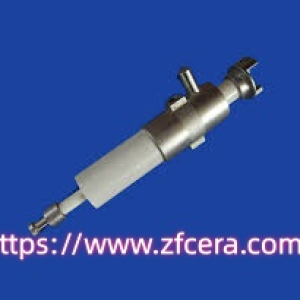
Industrial operators continue adopting this ceramic as they require materials that withstand thermal shock, mechanical pressure, and chemical influence while maintaining performance during long cycles. Those seeking durable components shaped through advanced ceramic methods can review product options at https://www.zfcera.com/ and observe how Zhufa integrates Silicon Nitride Ceramics into solutions intended for stable and long-lasting industrial use.