
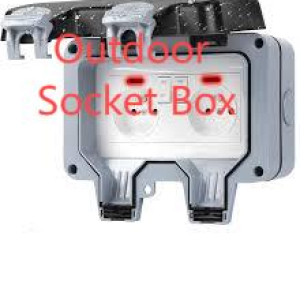
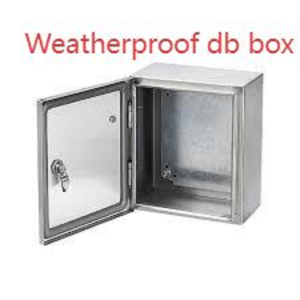
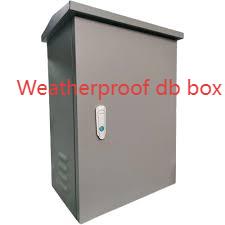
Early specification prevents costly field fixes: designers who pick the correct Weatherproof db box at concept stage avoid awkward on-site modifications, and when teams specify the right Weatherproof db box they align sealing, mounting, and service access so the enclosure performs predictably in real outdoor conditions. Choosing an enclosure family is therefore an exercise in matching materials, tests, and installation practice to the true exposures the equipment will face.
Site context and exposure profiling
A useful starting point is a granular exposure profile. Record expected spray directions, cleaning regimes, nearby chemical sources, salt-air risk, and likely impact points. Note whether the location experiences freeze–thaw cycles, high UV radiation, or frequent thermal cycling—each of these factors drives different choices for gasket chemistry, fastener metallurgy, and coating systems. A location-by-location matrix helps specify levels of protection rather than relying on a single “off-the-shelf” rating.
Materials, coatings and corrosion control
Material choice is the leading determinant of service life. For coastal or chemically aggressive sites, favor stainless steel or properly treated alloys and ensure fasteners use compatible metals to avoid galvanic corrosion. In sun-exposed locations, UV-stable polymer housings and UV-resistant pigments reduce chalking and embrittlement. High-quality powder coatings with certified pretreatment extend cosmetic life and protection. Specify terminal platings and contact finishes that resist tarnish so internal wiring remains reliable over years.
Gasket design and cable-entry strategy
Ingress protection is about design detail. Replaceable gasket channels, compression-managed flange geometry, and gland plates sized for expected conductor ranges are features that preserve sealing performance through maintenance cycles. Avoid field-cut entries whenever possible—modular gland plates or pre-molded entries allow future additions without degrading the seal. Consider durometer and chemical compatibility of elastomers where washdown or solvent exposure is likely.
Thermal management, surge protection and internal layout
Heat is an invisible enemy. Place heat-producing devices away from sensitive electronics and provide conductive mounting paths or thermal spreaders to dissipate energy. Reserve space for surge arrestors and properly sized fuses so protection is factory-fitted rather than retrofitted in ways that compromise sealing. Include clearances for airflow or heat-sinking where permitted and plan conductor routing to minimize thermal hotspots near terminals.
Mechanical robustness and mounting details
Mechanical design should reflect the expected abuse. Reinforced mounting flanges, captive fasteners, and impact-resistant lids reduce accidental damage and vandalism. Select anchors appropriate for the substrate—concrete, composite cladding, or timber—and avoid over-torquing which can distort sealing faces. For pole-mounted or vibratory locations, anti-rotation bosses and vibration-resistant fixings protect internal wiring from fatigue.
Nante product families and modular options
Modular enclosure families let you standardize and still customize. Look for removable gland plates, pre-tested accessory modules (metering, communications, surge), and standardized mounting footprints that speed procurement. Factory bench-testing of configured assemblies reduces surprises in the field. Modular inserts that can be swapped without cutting new holes allow upgrades and monitoring additions without sacrificing ingress protection.
Commissioning checks and practical verification
A factory rating only holds if installation preserves it. During commissioning verify uniform gasket compression, confirm torque on terminal blocks, and validate gland compression. Perform a practical ingress check—spray tests or controlled exposure—where safe and appropriate. Record installation parameters (gland sizes, torque values, orientation) so maintenance teams can replicate original conditions in future interventions.
Maintenance planning and spare-part readiness
Plan spare kits: common gaskets, gland plates, and fasteners should be stocked locally to shorten repair times. Schedule inspections focused on seal condition, fastener security, and terminal discoloration. Use thermal imaging to detect contact resistance and hotspots during routine maintenance. Standardizing enclosure families across sites reduces spare-part complexity and training load.
Supplier transparency and test evidence
Require IP/IK test reports, material declarations, dielectric data, and witnessed assembly records from vendors. Batch traceability and clear installation manuals speed audits and warranty support. Prefer suppliers who publish test data and who offer configurators so you can verify options and lead times without guesswork.
Balancing procurement cost with lifecycle value
Avoid buying strictly on unit price—underspecification often yields repeated failures and higher lifecycle cost. Conversely, wholesale over-specification can inflate capital outlay unnecessarily. Evaluate total cost of ownership: expected maintenance intervals, spare availability, warranty coverage, and supplier support. Where possible, pilot a small number of configured units to validate in-situ performance before full roll-out.
Choosing an enclosure system that properly reflects the site, mechanical loads, and service expectations reduces downtime and lowers total ownership cost. For detailed product families, configurators, datasheets, and factory support, visit www.nante.com